Introduction
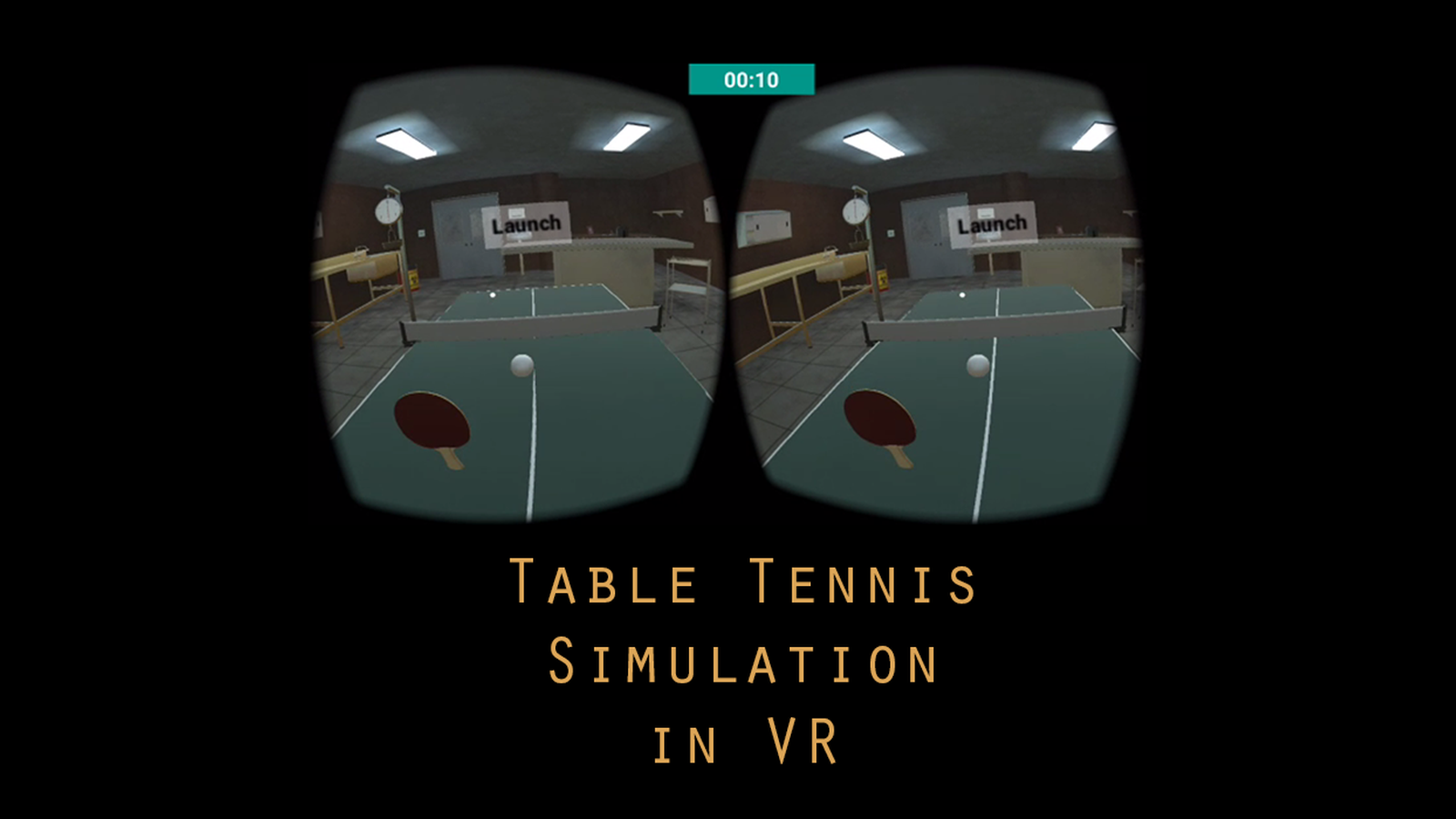
My undergraduate thesis project — a simulation of a table-tennis game in Google Daydream, where the player’s hands act as paddles. Hand tracking is driven entirely by the mobile device’s camera.
Approach
An OpenCV wrapper for Unity C# was used to implement tracking via the mobile camera, removing the need for extra hardware controllers. Players simply move their hand in front of the phone to control the paddle in VR.
This project explored how far commodity hardware — just a phone and a Daydream viewer — could be pushed toward natural, controller-free interaction.
Technical implementation
I worked across both sides of the prototype: the OpenCV-based object-tracking pipeline that interpreted the mobile camera feed and the Unity interaction layer that translated those results into responsive paddle movement. Designing the experience meant balancing what felt natural in VR against the practical limits of mobile-camera tracking and phone-class hardware.
The broader research contributed to a peer-reviewed publication on virtual reality and gesture recognition, connecting the working prototype to a more general investigation of natural user interfaces.